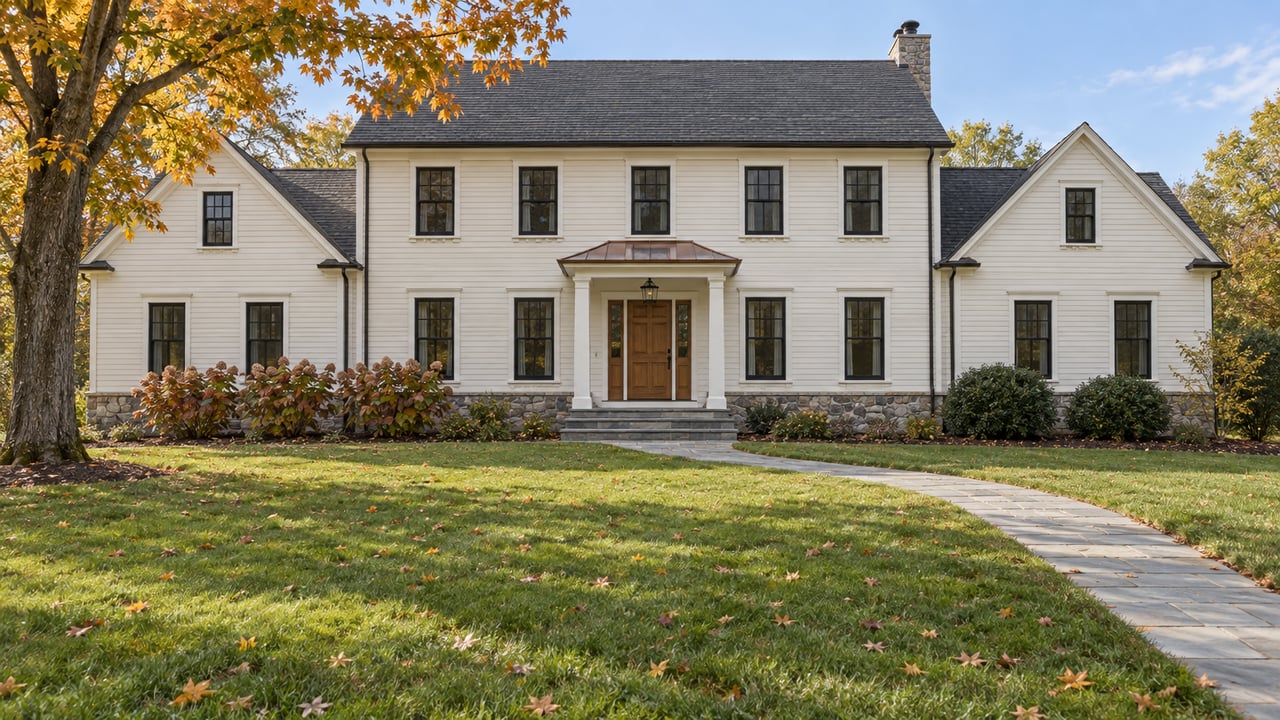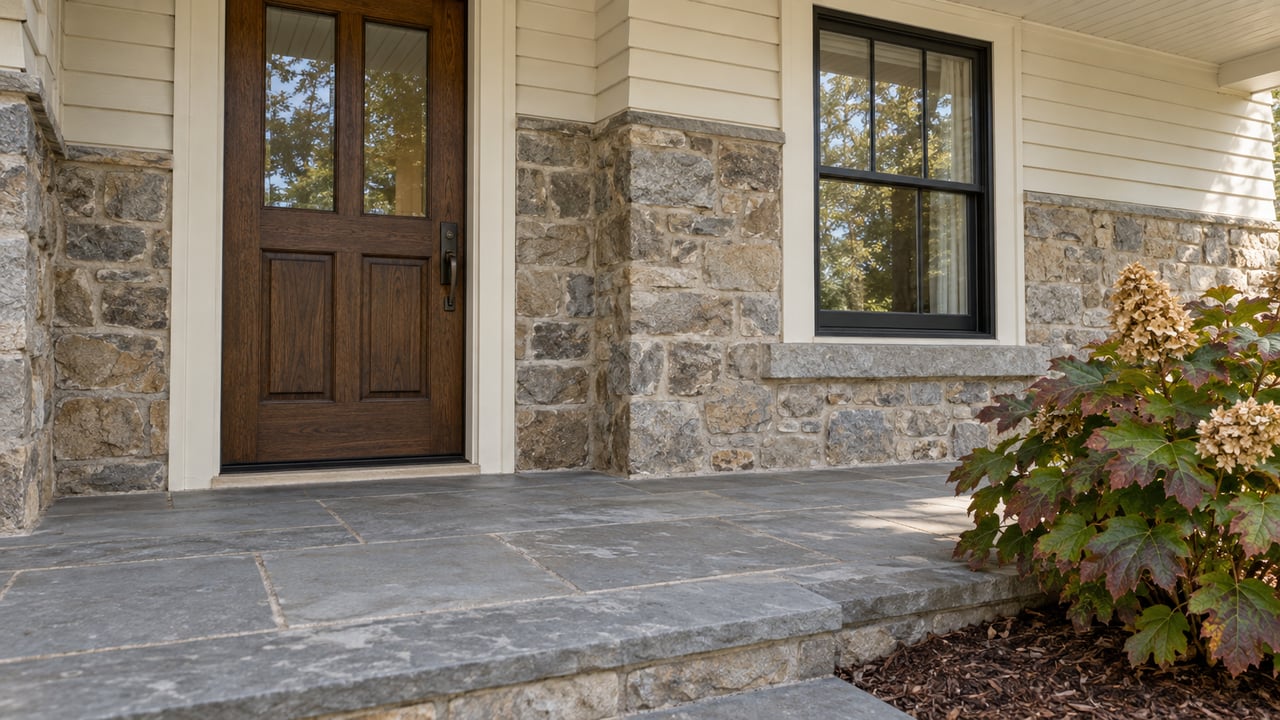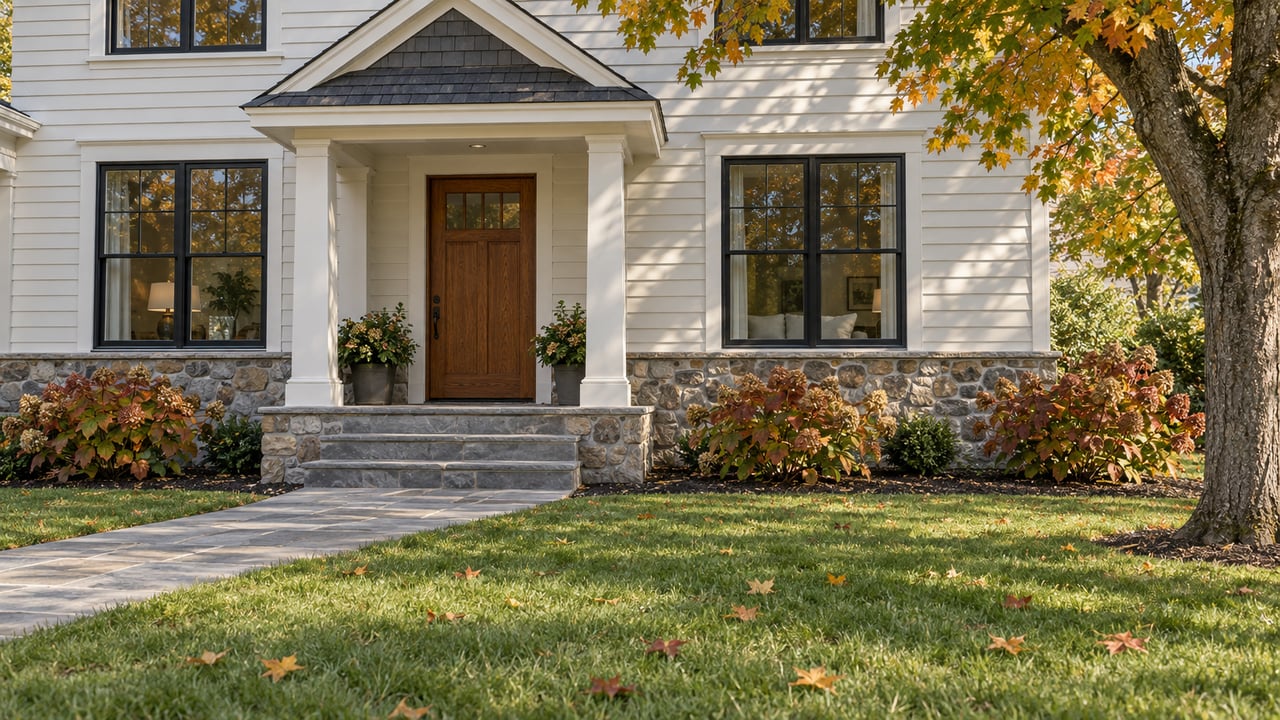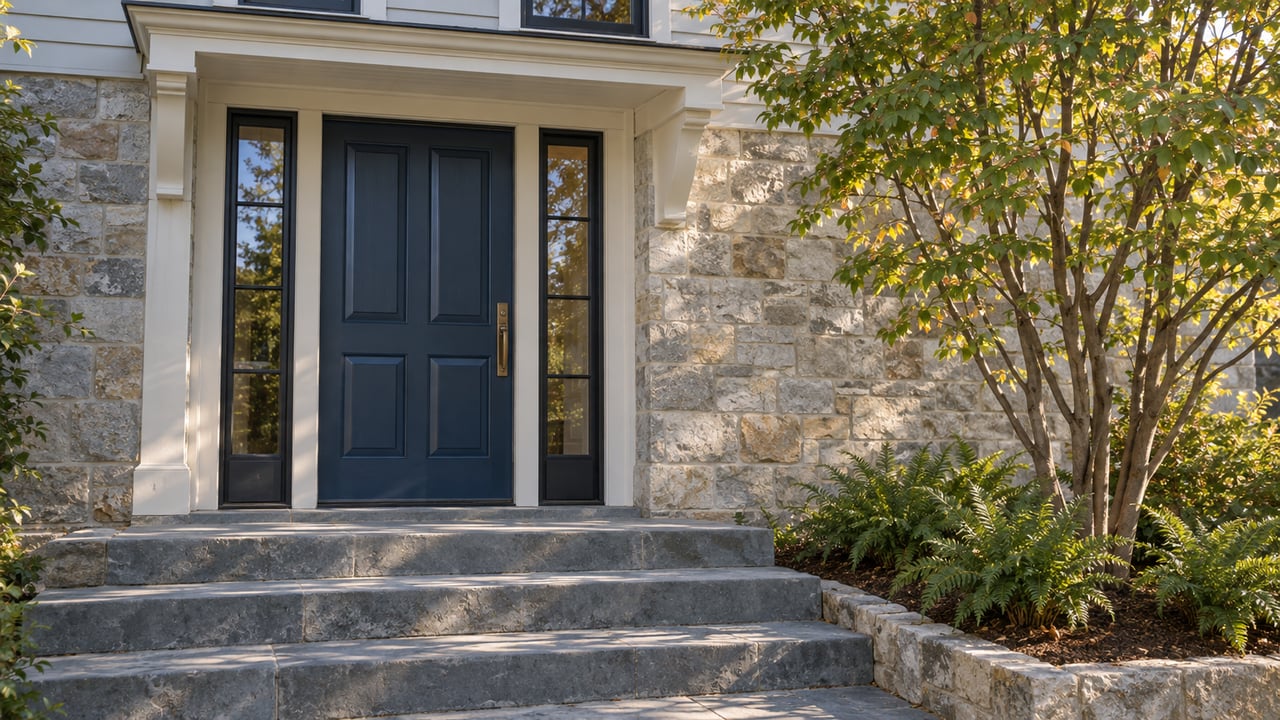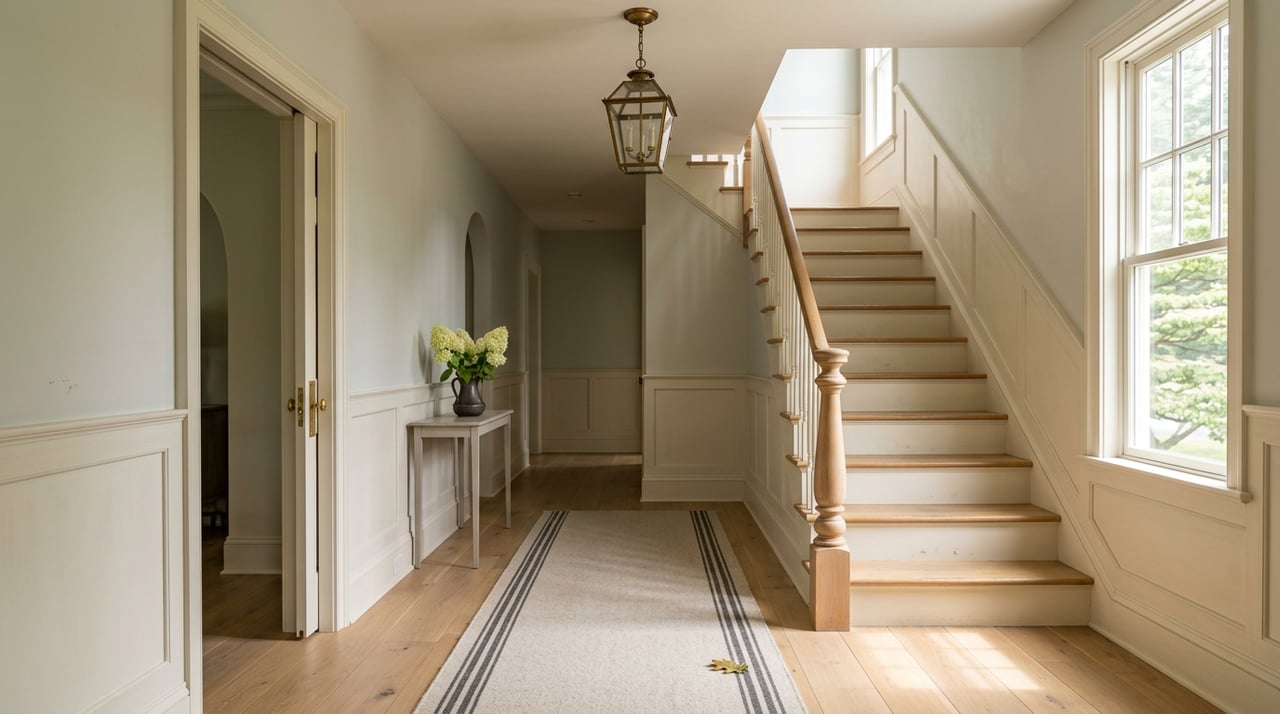
Picture two nearly identical colonials, each listed at $2,020,000. One sits on a quarter-acre inside Chatham Borough, a short walk from the train. The other sits on 1.3 acres in Chatham Township, five minutes by car from the same platform. On paper, they look like the same trade. In practice, after July 10, 2025, the seller of either home now owes the state $40,400 at closing under New Jersey's revised transfer fee, a bill that used to belong to the buyer and used to be half the size. The buyer who priced their offer off a "Chatham" median pulled from a portal has already misread the market before they've walked either house.
That misread is the point of this post. Chatham looks like one town. To the tax collector, the planning board, and the pricing model, it is two. If you are comparing Chatham to Summit, Madison, or Short Hills from a spreadsheet, the single blended median you're using is the wrong number, and the July 2025 change to the state transfer fee has made the mistake more expensive than it used to be.
Two towns, one ZIP, one school district
Chatham Borough and Chatham Township are separately governed municipalities. They share ZIP code 07928, the School District of the Chathams, and a library, but they run their own mayors, councils, police, and tax rates. The Borough covers roughly 2.4 square miles built tight around Main Street and the NJ Transit Chatham station. The Township wraps around it across roughly 9 square miles of more wooded parcels running out toward the Great Swamp National Wildlife Refuge.
That geography is the pricing story. Borough lots often fall in the 0.15 to 0.25 acre range on pre-war housing stock. Township lots commonly run 0.5 to 2 acres, with pockets of 1 to 5 acre estate parcels and a heavier concentration of newer construction.
| Chatham Borough | Chatham Township | |
|---|---|---|
| Approx. area | 2.4 sq mi | 9 sq mi |
| Typical lot | 0.15–0.25 ac | 0.5–2+ ac |
| Median sale price (2026 YTD) | ~$1.24M | ~$1.69M |
| 2025 average property tax bill | Several thousand below Township | ~$18,370 |
| Effective tax rate | ~1.9% | ~1.9% |
| Walk to Chatham station | Common in the core | Rare |
| Station permit parking | Reserved for Borough residents | Waitlist / drive to Summit |
| School district | School District of the Chathams (shared) | School District of the Chathams (shared) |
The blended figures you'll find on national portals sit somewhere between those two columns and describe neither market accurately. Redfin's most recent snapshot pegged the combined Chatham median sale price at $1.2M with a 94-out-of-100 competitive score as of Q1 2026. Movoto reported an April 2026 median sale of $1,397,000 with 14 days on market. Both are technically true and simultaneously useless if you are pricing a specific house.
Why the gap isn't about the schools
The most consequential thing about the $450,000 spread between the two municipal medians is what it is not measuring. It is not measuring school quality. Both towns feed into the single School District of the Chathams. Borough and Township children attend zoned elementary schools through the early grades and then merge at the shared upper-elementary, middle, and high schools. Whichever side of the town line you buy on, the classroom is the same.
What the premium is measuring is land and vintage. Township parcels are larger, more likely to be wooded, and more likely to hold post-1990 construction or a substantial recent renovation. Borough parcels are smaller, closer to pre-war housing stock, and closer to the station, the shops, and the parade route.
For a buyer comparing Chatham to Short Hills or Summit, the practical implication is this: if the reason Chatham is on your list is the district, the Borough gives you the same academic outcome at a materially lower entry price than the Township. If the reason is acreage and newer square footage, the Township is doing the work the price is asking of it. Choosing between them on a blended "Chatham" median is choosing on the wrong axis.
The station parking rule reprices the Borough on its own
There is a specific transaction-level friction that spreadsheets never capture and that most cross-town comparisons miss entirely. Permit parking at the Chatham train station is generally reserved for Borough residents, and the list has real waits. Many Township commuters drive instead to the Summit garage.
That single administrative fact changes what a Borough home is actually selling. A Borough house within walking distance of the platform is selling a permit-free commute. A Township house across the border is selling a car trip on either end. When two otherwise comparable homes list within a few weeks of each other in the same school district at similar prices, the walk-to-train delta is often the reason the Borough listing runs to a higher list-to-sale ratio. Local appraisal data shows Borough list-to-sale ratios averaging roughly 106% over recent six-month windows, with market times often under three weeks.
The July 2025 seller tax that changed the math on Township sales
The state made the two-town distinction more expensive on July 10, 2025. What most sellers still call the "mansion tax" is now the Graduated Percent Fee, and two things about it are new.
First, the obligation to pay it moved from the buyer to the seller. Under the prior structure, a buyer paying $2,020,000 owed a flat 1%, or $20,200, at closing. Under the new structure, the seller of that same home owes the fee, and the rate on a sale over $2M steps up.
Second, the rate is now tiered, and the tiers are flat rates applied to the entire consideration rather than only the amount above the threshold. Sales from $1M to $2M remain at 1%. Sales from $2M to $2.5M are taxed at 2%. Sales from $2.5M to $3M are at 2.5%. Sales from $3M to $3.5M are at 3%. Sales above $3.5M cap at 3.5%. The full text and the tier table are on the NJ REALTORS® Graduated Percent Fee page.
The word "flat" is doing quiet damage here. A $2,000,000 sale in the Township generates a $20,000 seller fee. A $2,020,000 sale generates $40,400. Twenty thousand additional dollars of sale price triggers twenty thousand additional dollars of tax. That is a cliff, and it sits directly on top of the price band where a growing share of Chatham Township transactions actually close.
Contracts fully executed before July 10, 2025 with deeds recorded by November 15, 2025 kept the old 1% buyer-paid rate under a grace period. That grace period has closed. Every Chatham sale under contract today is being negotiated inside the new structure.
For sellers, the implication is concrete. Pricing a Township home at $2,050,000 to "leave room" now costs the seller roughly $20,000 more in fees than pricing the same home at $1,995,000 and negotiating up. Pricing decisions that used to be about buyer psychology are now about tax cliffs.
For buyers, the implication is quieter but just as real. Sellers who understand the new tiers will not casually accept offers that land a few thousand dollars over a bracket line, because the seller absorbs the entire step. Expect more resistance at $2.00M, $2.50M, $3.00M, and $3.50M than the raw comps would predict.
How to actually use the numbers
If you are shopping or listing in Chatham this cycle, three habits keep you out of the blended-median trap.
- Run separate comps by municipality. A Borough listing gets Borough comps. A Township listing gets Township comps. Cross-comparing is how buyers overpay and how sellers under-list. Both mistakes are visible in the closing statement.
- Read the tax bill, not the effective rate. Both towns sit near a 1.9% effective rate, but the dollar bills diverge. The Township's 2025 average bill was reported at roughly $18,370, with about two-thirds funding the shared school district. Borough bills run several thousand dollars lower on similarly assessed homes.
- Model the Graduated Percent Fee before you set a list price or write an offer. On any Chatham sale above $1M, and especially above $2M, that fee is now a line item in the seller's net, and the tier boundaries reward disciplined pricing.
A short FAQ for buyers already circling Chatham
If the schools are shared, is there any reason to pay the Township premium? Yes, if what you're buying is land, newer square footage, or proximity to the Great Swamp trails, Loantaka Brook Reservation, or Patriots' Path. No, if your reason is the district itself.
Can a Township resident get a permit at the Chatham station? Generally not. Permit parking there is reserved for Borough residents, and the waitlist is real. Many Township commuters drive to the Summit garage on the same NJ Transit Midtown Direct line, which reaches New York Penn Station in about 45 minutes.
Does the July 2025 fee change apply to homes under $1M? No. The Graduated Percent Fee only applies to transfers of $1M or more. The separate Realty Transfer Fee is unchanged.
Who pays the fee on a contract signed before July 10, 2025? If the deed was recorded on or before November 15, 2025, the old 1% buyer-paid structure applied. Everything after that window sits under the new seller-paid tiers.
If you are weighing a move between the Borough and the Township, timing a sale into the new tax structure, or comparing Chatham to a neighboring commuter town, the pricing conversation is worth having with someone who runs separate comps for each side of the line. The Power of 2, Laura Hubert and Gina Rossomondo of RE/MAX Competitive Edge, works these markets across Morris and Union counties every week. Schedule a consultation and we will build the number that fits your specific block, not the town-wide headline.