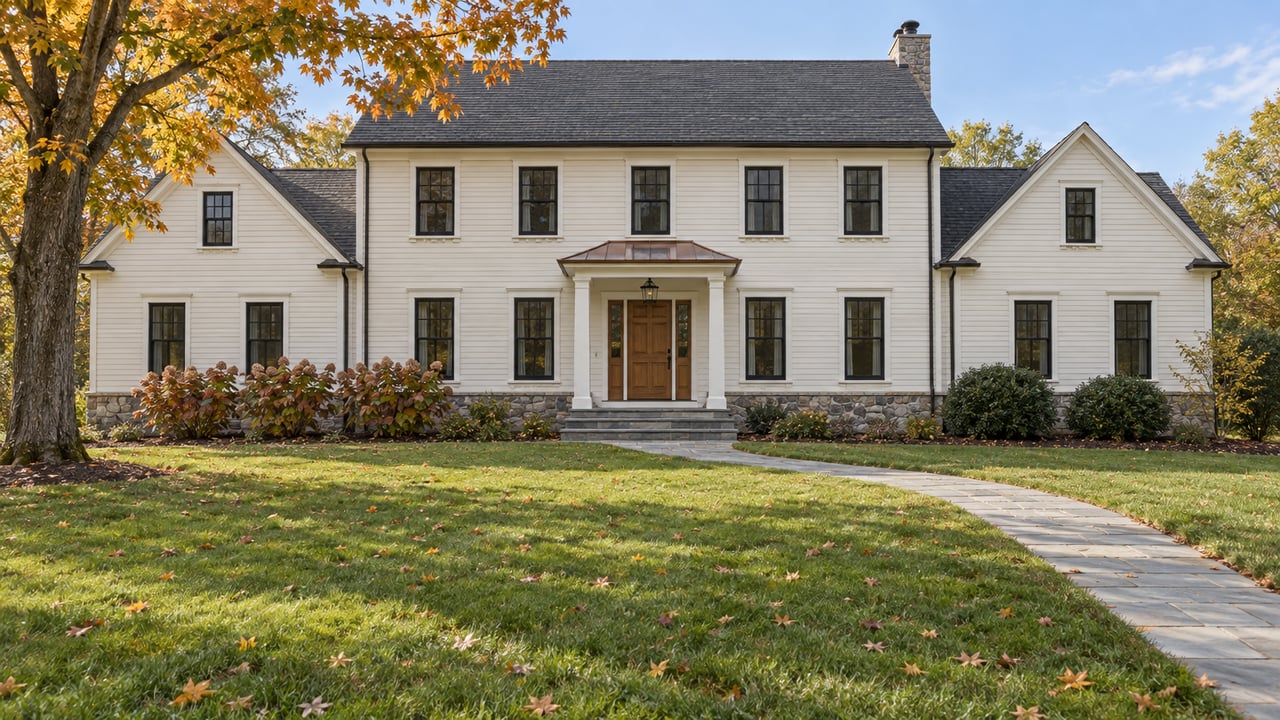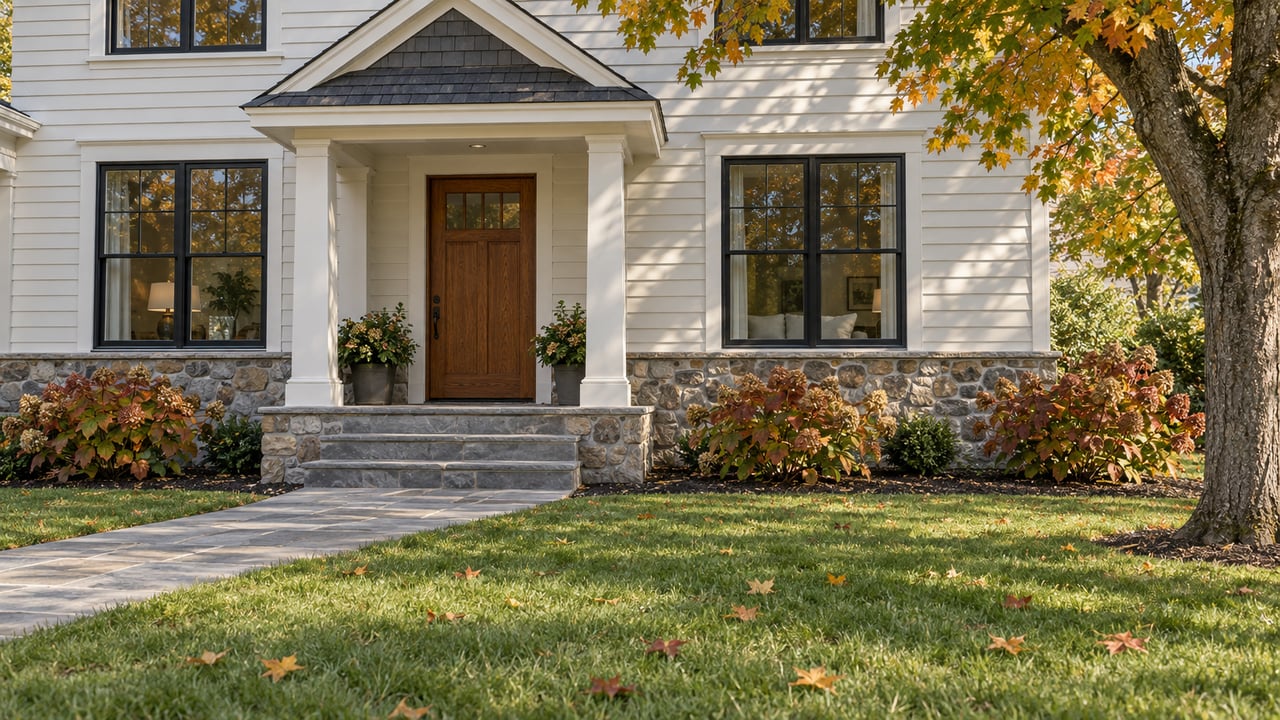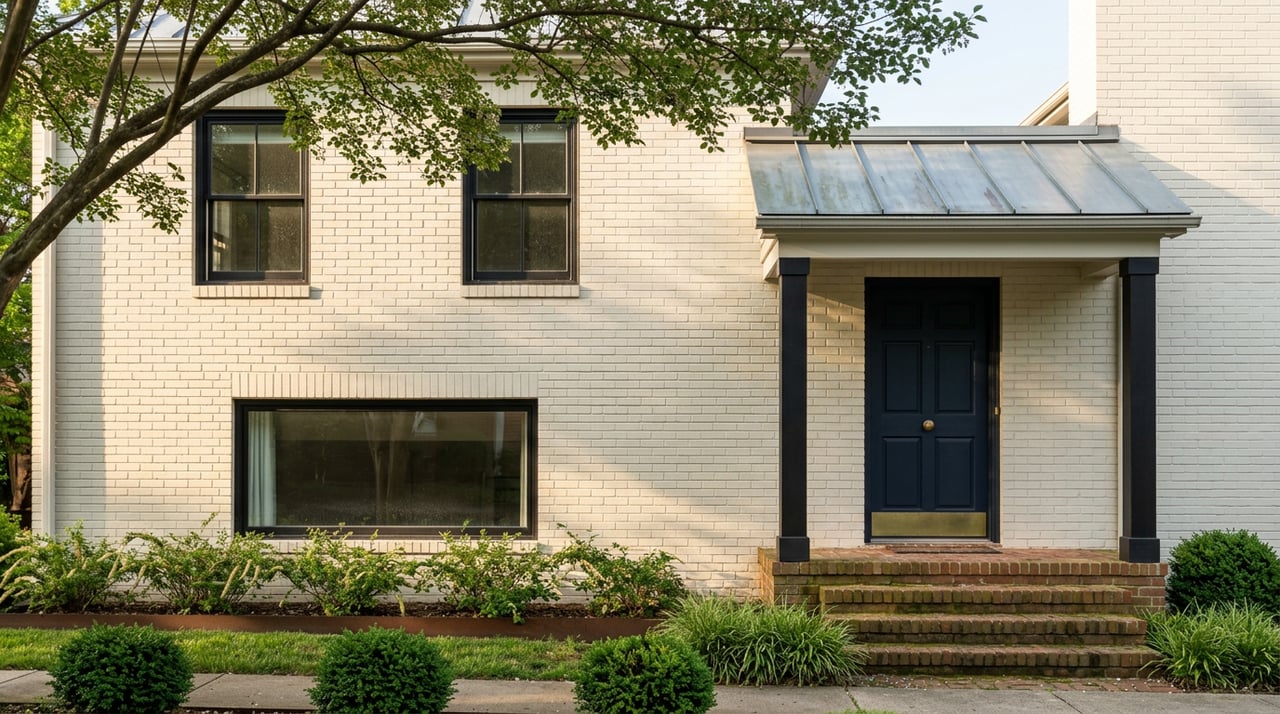
A single-family home near Morristown's Green pays into the same tax pool it always has. A six-story building going up two blocks away, on Spring Street, will not, not for the next twenty years. Both properties sit inside the same town, the same school district boundary, and roughly the same commute to the train station. Only one of them is funding it the same way.
When comparing a downtown condo to an older colonial a half mile away, a buyer should check whether the listing's tax estimate is a conventional property tax bill or a payment in lieu of one, and, if it is a PILOT, when that agreement expires.
The Bill Everyone Assumes Is Shared Equally
Morristown's 2026 municipal budget runs $60.6 million, and it raises the tax bill for the average homeowner by $207 this year according to reporting from Morristown Minute. For a home assessed at the town's average of $635,841, the total property tax increase works out to 5.5%, or about $52 a month.
Part of the pressure is structural. The town says it has been shorted $31.7 million in state utility revenue since 2001, a gap it has been arguing over for years. Part of it is spending: public safety alone accounts for $12.6 million, nearly a quarter of the proposed operating budget, and the public works utilities line jumped from $878,138 in actual 2024 spending to a proposed $1.21 million this year.
Another factor is tax-exempt property. The 2025 Morris County Abstract of Ratables lists $544.3 million in tax-exempt real property in Morristown, split roughly between public buildings, churches and charitable property, and other exemptions. That's real land and real buildings sitting outside the tax base entirely, which means the budget's growth has to be absorbed by whatever remains taxable.
What remains taxable just got smaller. Morristown's net assessed valuation fell about $73 million between 2025 and 2026, from $4.75 billion to $4.68 billion, driven by a $125.4 million drop in commercial assessed value. Residential assessments stayed nearly flat. Apartment assessments went up.
That last detail is the seam. When commercial value drops and residential value holds steady, single-family homeowners end up covering a larger share of a budget that keeps growing. Meanwhile the fastest-growing category of real estate in town, new apartment and condo construction, isn't necessarily paying into that same pool.
How a PILOT Changes a Building's Tax Payments
The mechanism is a PILOT, short for Payment in Lieu of Taxes. According to NJTOD, under New Jersey's Long-Term Tax Exemption law, a developer building in a designated redevelopment zone can agree to pay the municipality an annual service charge instead of conventional property tax on the improvements, for a term that can run up to 30 years. Land value stays on the regular tax rolls. Only the building itself gets the alternate arrangement.
The money still moves, just through a different pipe. The municipality keeps 95% of a PILOT payment and remits 5% to the county, and that revenue doesn't get divided among municipal, county, and school budgets the way a conventional tax bill does. Schools get a share only if a separate agreement specifically grants one.
Here's the same comparison laid out directly:
| Conventional single-family home | PILOT-financed building | |
|---|---|---|
| What's taxed | Land and improvements, assessed and billed like any other property | Land taxed normally; improvements pay a negotiated service charge instead |
| Who receives the payment | Split among municipal, county, and school budgets | 95% to the town, 5% to the county, with schools included only if a separate agreement says so |
| How long the arrangement lasts | Ongoing, reassessed as values change | Fixed for up to 30 years; as Rutherford Borough's PILOT fact sheet explains, the property returns to conventional taxation upon expiration |
That reversion matters for anyone buying into a PILOT unit with a long time horizon. The service charge a buyer sees today is not necessarily what a future owner will pay once the agreement runs out.
Spring Street's Twenty-Year Answer
M Lofts is the clearest local example, and it's fresh enough that most of the town is still arguing about it. Morristown Green reported that the Morristown Planning Board approved the project in October 2025, a $78.3 million, six-story building at 35 Spring Street with 150 apartments, 30 of them affordable, two levels of parking totaling 165 spaces, and a new public park along the Whippany River. Construction was expected to start by mid-2026 and take about two years, according to SJP Properties vice president Keenan Hughes, who called the approval a chance to finally "bring this to fruition."
The site had sat on Morristown's redevelopment list for more than 20 years, part of a Spring Street Redevelopment Plan the town adopted back in 2008. It sits beside M Station, the SJP and Scotto Properties office campus that now houses Deloitte and Sanofi's U.S. headquarters along with Valley National Bank. Mayor Tim Dougherty called SJP the "outstanding developer" behind that campus when the M Lofts approval came through.
According to RE-NJ, the developer is also preserving a piece of the town's history on the same block: the ruins of one of the first publicly funded schoolhouses for Black students in New Jersey, established by the Morristown School District in 1877, will be donated to the town rather than cleared, and a nearby tenement building is going to Habitat for Humanity to create eight additional units.
The town approved a 20-year PILOT for M Lofts, and instead of paying into the regional school tax levy, the developer will make its payments to the nonprofit Morris Educational Foundation. Some residents questioned the arrangement, since the foundation isn't the elected board of education and doesn't operate under the same public oversight as the school district's regular budget process. Others in town saw it as the only way to make a two-decades-stalled parcel finally pencil out.
Either way, for the length of that 20-year term, M Lofts will not be paying the same kind of school tax a single-family home three blocks away pays every year.
Why the Math Gets Tighter Every Year the List Grows
None of this makes new construction a bad purchase. It makes it a different kind of purchase, one where the tax line on a listing sheet is doing more work than it appears to.
The town's own numbers show why the gap is likely to keep widening rather than closing. Commercial ratables are shrinking. Residential ratables are flat. Apartment ratables are rising, and a meaningful share of that new apartment stock is arriving under PILOT terms rather than conventional assessment. Every dollar of budget growth that can't come from a PILOT-covered building has to come from somewhere else, and right now that somewhere else is largely existing single-family homeowners.
That's the trade a buyer is actually making when they choose between an established Morristown home and a unit in a newer PILOT-financed building. The established home carries its full, ongoing share of a budget that keeps climbing. The PILOT unit carries a fixed, negotiated payment that may be lower today, may or may not fund schools the way a conventional tax bill would, and will eventually convert to standard taxation once the agreement's term runs out.
What to Ask Before You Assume Your Tax Bill Looks Like the Listing
A few questions are worth asking before writing an offer on anything in Morristown's downtown redevelopment footprint:
- Is this specific unit or building operating under a PILOT agreement, and for how many more years?
- Does the PILOT payment include a school funding component, or does it route around the regular levy the way M Lofts does?
- What is the projected tax bill once the PILOT expires and the property reverts to conventional assessment?
None of this is tax or legal advice, and PILOT terms vary project to project. An attorney who reviews the actual redevelopment agreement, not just the estimated tax line on a listing, is the only reliable way to know what a specific address is committed to.
A Short FAQ
Does a PILOT status show up on a standard listing? Not consistently. The estimated tax figure a listing shows is often the current service charge, not a full property tax calculation, so it's worth confirming directly with the listing agent or an attorney rather than assuming the number reflects conventional taxation.
What happens to the tax bill once a PILOT expires? The property returns to conventional taxation once the agreement's term ends, which can mean a meaningfully different bill than the one in place when the PILOT was active.
Are single-family homes ever part of a PILOT? New Jersey's Long-Term Tax Exemption law covers commercial, residential, office, and industrial redevelopment, but the agreements require a property to sit inside a designated redevelopment zone.
If you're weighing a downtown unit against an established Morristown home, or trying to figure out what a specific address's tax trajectory actually looks like over the next decade, The Power of 2 can walk through the redevelopment agreements and assessment history property by property. Schedule a consultation and we'll help you read the fine print before you write the offer.